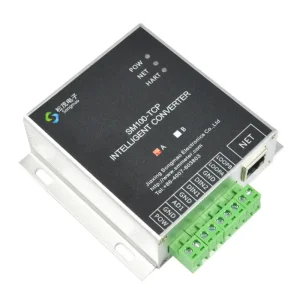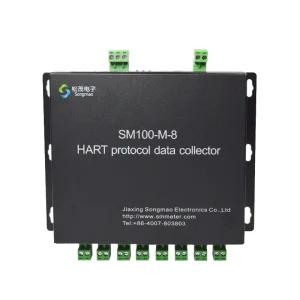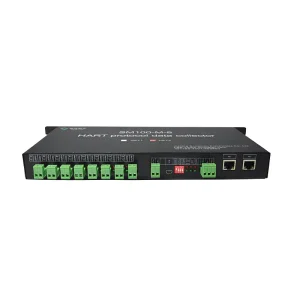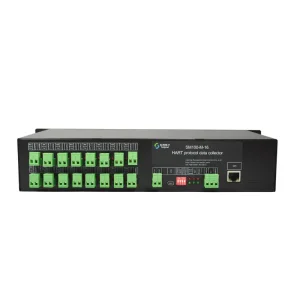
Italy stands as a global powerhouse in manufacturing, particularly across the Lombardy, Emilia-Romagna, and Veneto regions. As the third-largest economy in the Eurozone, the Italian industrial sector is currently undergoing a massive digital transformation driven by the "Piano Transizione 4.0". Central to this shift is the need for reliable data communication between legacy analog instruments and modern ERP/MES systems. This is where a professional HART Modem Supplier becomes critical.
In Italy, sectors such as Oil & Gas (Eni), automotive, and high-end textile machinery rely heavily on the HART (Highway Addressable Remote Transducer) protocol. While newer protocols like OPC-UA are gaining ground, the vast installed base of 4-20mA instruments necessitates high-performance HART-to-Modbus and HART-to-Ethernet converters. Italian engineers demand high reliability and compliance with European standards, seeking suppliers who can provide not just hardware, but deep technical expertise in signal isolation and multi-channel data aggregation.
Globally, the HART protocol remains the most widely used digital communication technology in the process industries. According to recent market analysis, over 70% of all smart instruments installed worldwide are HART-enabled. The market for HART modems and gateways is projected to grow steadily as industrial IoT (IIoT) requires the extraction of secondary variables (such as device diagnostics, temperature, and pressure) that were previously trapped in 4-20mA loops.
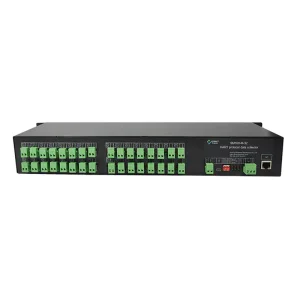
Suppliers are now pivoting toward multi-protocol support. The global demand is shifting from simple point-to-point modems to 16-channel and 32-channel HART-to-Modbus TCP gateways that can handle complex industrial networks. As global supply chains stabilize, the emphasis has shifted to lead time, R&D agility, and long-term stability.
Why are Italian and global enterprises increasingly choosing Chinese manufacturers like Songmao Electronics? The answer lies in the intersection of cost-efficiency and specialized R&D. Established in 2007, Songmao has spent 18 years refining the HART communication layer.
For an Italian distributor, sourcing from a manufacturer with 18+ years of quality control experience ensures that their reputation remains intact while maximizing their margins in a competitive market.
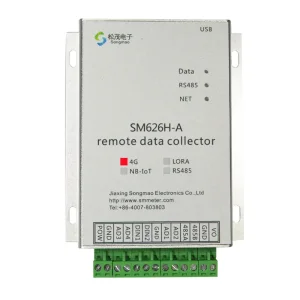
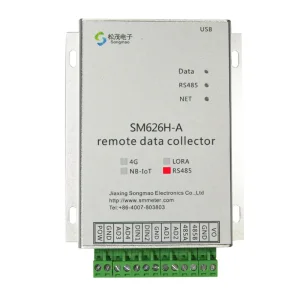
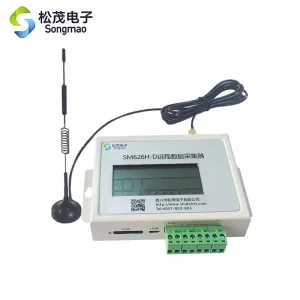
Remote monitoring of wellhead pressure using 4G/GPRS HART collectors where wired infrastructure is non-existent.
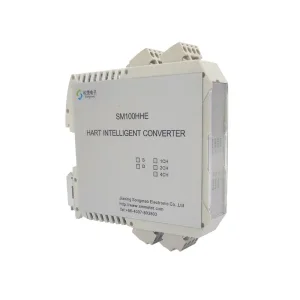
Integrating multi-variable flow meters into municipal heat management systems via HART-to-Modbus TCP gateways.
Ensuring precision in fermentation tanks by extracting temperature and acidity data through HART converters for real-time PLC monitoring.
The industrial world is moving toward Ethernet-APL (Advanced Physical Layer), but the transition will take decades. In the interim, the industry is seeing a surge in "Smart Conversion." Modern HART modems are no longer passive transparent bridges; they are becoming intelligent edge devices. Future HART solutions will include built-in web servers for configuration, advanced diagnostic logging, and seamless integration with IoT protocols like MQTT and JSON. Songmao Electronics is at the forefront of this, developing gateways that not only convert protocols but also filter and pre-process data to reduce bandwidth costs.
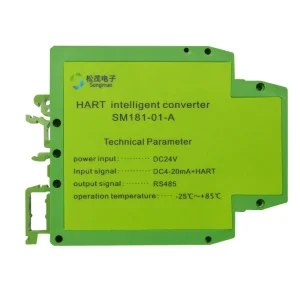
It allows modern PLC systems (which typically speak Modbus RTU or TCP) to read the rich diagnostic data from HART-enabled field instruments, such as device status, secondary variables, and configuration parameters, without replacing the instruments.
Yes, all our HART collectors support standard Modbus protocols used widely in Italian automation (Schneider, Siemens, ABB). Our engineers provide remote debugging support to ensure seamless integration.
Absolutely. By converting HART data to TCP/IP, you can monitor field instruments across any network infrastructure, including VPNs and private industrial clouds, making it ideal for distributed assets in the Italian water or energy sectors.
We implement strict ISO-certified quality control, including high-voltage isolation testing and long-term burn-in tests, ensuring that our converters withstand the harsh EMI environments of heavy industrial plants.