Industry-standard HART to Modbus & RS485 Solutions for Global Procurement
Strategic Technical Analysis for Modern Industrial Systems
Modbus RTU (Remote Terminal Unit) is the traditional serial communication protocol utilized over RS-232 or RS-485. In a wholesale environment, RTU devices are prized for their cost-effectiveness and robustness in electrically noisy environments. It uses a compact, binary representation of the data for protocol communication.
Modbus TCP is essentially the Modbus RTU protocol with a TCP interface that runs on Ethernet. It leverages the 5-layer Internet protocol suite, allowing for unlimited simultaneous connections and significantly higher data throughput. For large-scale industrial IoT (IIoT), TCP is the preferred architecture for cloud integration.
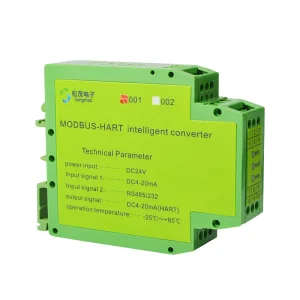
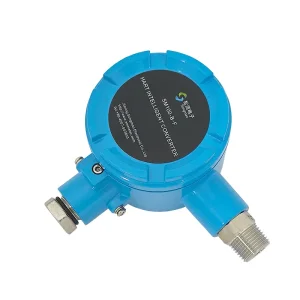
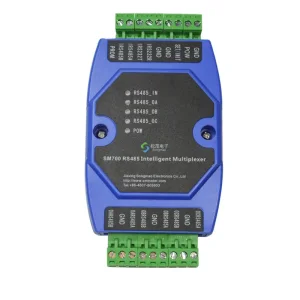
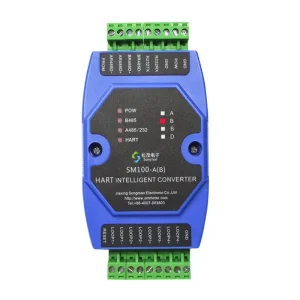
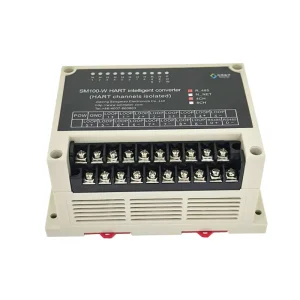
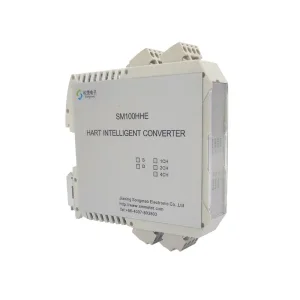
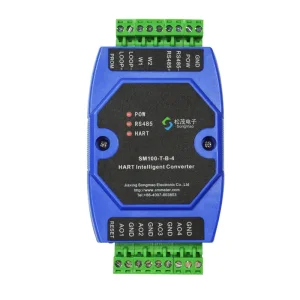
When selecting a supplier, look for Information Gain beyond basic data sheets. A high-end converter like the SM100-B doesn't just bridge protocols; it manages packet fragmentation, latency optimization, and provides diagnostic buffers—features critical for preventing network downtime.
| Feature | Modbus RTU (Serial) | Modbus TCP (Ethernet) |
|---|---|---|
| Physical Layer | RS-232, RS-485, RS-422 | Ethernet (RJ45, Fiber Optic) |
| Speed | Limited (up to 115.2 kbps) | Fast (10/100/1000 Mbps) |
| Addressing | 1-byte Slave ID (1-247) | IP Address (Standard TCP/IP) |
| Checksum | CRC (Cyclic Redundancy Check) | TCP Checksum (Handled by IP stack) |
| Scalability | Master-Slave (Daisy chain) | Client-Server (Star network/Switches) |
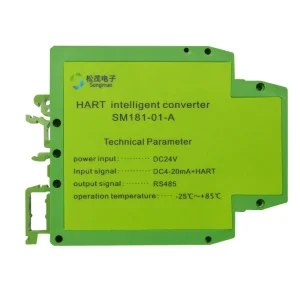
Established in 2007, Jiaxing Songmao Electronics Co., Ltd. has spent over 18 years perfecting the art of industrial communication. As a premier China factory supplier, we specialize in independent R&D of HART protocol products and Modbus data collectors.
Our commitment to technical excellence and rigorous ISO9001 quality control has enabled us to serve clients in over 40 countries, bridging the gap between legacy analog sensors and modern digital control systems.

Solving Complex Communication Challenges Across Diversified Verticals





For global enterprises, sourcing Modbus TCP and RTU converters from a verified China factory manufacturer like Songmao offers more than just competitive pricing. It provides access to a mature supply chain ecosystem that ensures rapid prototyping and massive scalability.
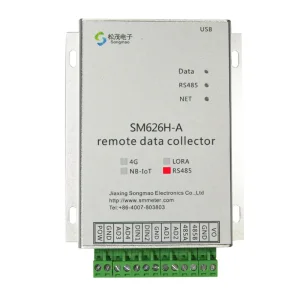
Our products are engineered to meet global standards including CE, RoHS, and FCC. We provide localized technical support and multilingual documentation, ensuring that a project in Germany, a water plant in Brazil, or an oil field in Saudi Arabia can implement our SM626H-DA units with zero compatibility friction.
Modern procurement directors focus on Reliability (MTBF) and Information Gain. We provide deep-level technical whitepapers, detailed analysis of Modbus communication protocol, and tutorial guides on "How to connect Modbus TCP/IP". This commitment to transparency and expertise builds the Trust component of E-E-A-T.
Expert Answers for Industrial Communication Challenges
High-Performance HART-to-RS485 & Wireless Solutions
The next generation of Modbus TCP gateways will feature edge computing capabilities. Instead of just passing data, gateways like the SM626H-D will perform local data analysis, reducing cloud latency and bandwidth costs.
Wholesale demand is shifting toward 4G/5G enabled Modbus collectors. These devices allow for remote monitoring in isolated environments (water reservoirs, remote oil pumps) where wired Ethernet is physically impossible.
As industrial systems become more connected, suppliers must prioritize cybersecurity. Songmao is developing encrypted communication layers to protect Modbus TCP packets from unauthorized interception.
"In the era of Industrial 4.0, the difference between Modbus TCP and RTU is not just about the cable; it's about the speed of your business intelligence. At Songmao Electronics, we bridge that gap with 18 years of technical mastery."