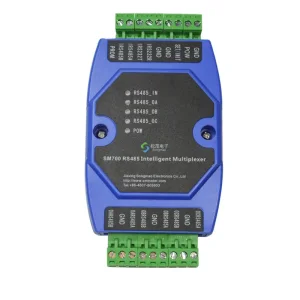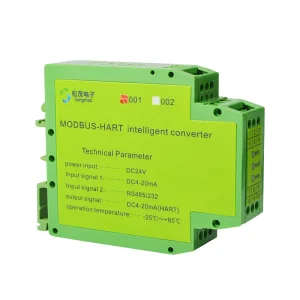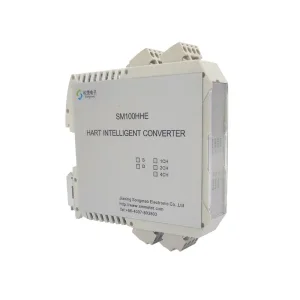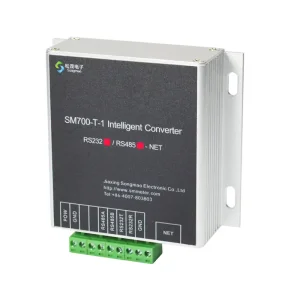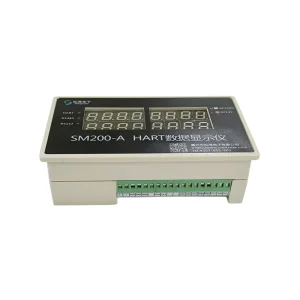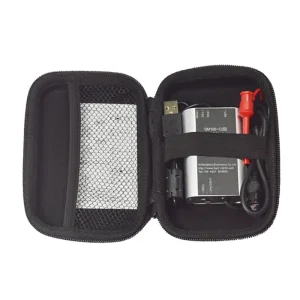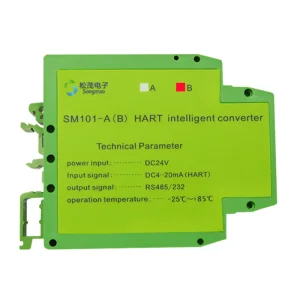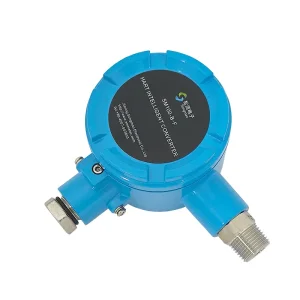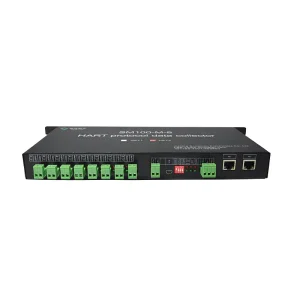
In the era of Industry 4.0, the Modbus module remains the backbone of industrial communication. Originally developed in 1979, the protocol has transcended decades to become the de facto standard for connecting industrial electronic devices. Today, the global market for Modbus RTU and TCP/IP converters is experiencing a resurgence, driven by the need for legacy system integration within modern Industrial Internet of Things (IIoT) frameworks.
As a premier Modbus Module Manufacturer, we recognize that the demand is no longer just for simple data transmission but for Information Gain—the ability to extract actionable intelligence from field sensors. Our SM-series modules provide this bridge, converting complex HART signals into clean, Modbus-addressable registers for PLCs, SCADA systems, and cloud gateways.
Current industrial trends show a shift toward "Edge-to-Cloud" architectures where Modbus modules act as critical edge nodes for real-time monitoring in oil, gas, and water treatment sectors.
Wholesale demand for robust Modbus modules is surging in emerging markets (SEA, Latin America) where industrial infrastructure is rapidly digitizing and modernizing.
E-E-A-T is not just for content; it's for hardware. Our factories prioritize electromagnetic compatibility (EMC) and lightning protection to ensure "Trustworthy" operation in harsh environments.
Jiaxing Songmao Electronics Co., Ltd., established in 2007, has dedicated over 18 years to technological innovation in industrial automation. Based in the heart of China's high-tech manufacturing corridor, we specialize in the independent R&D of HART protocol products and Modbus data collectors.
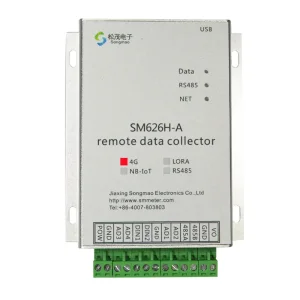
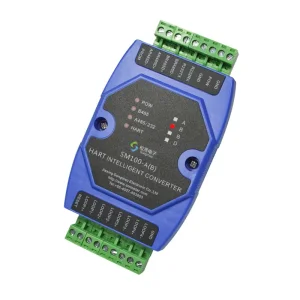
Our mission is to provide high-tech solutions that simplify industrial communication. From our SM100 series to the advanced SM626H data collectors, every product is a testament to our commitment to quality, reliability, and precision engineering.

Choosing a China Modbus Module Factory like Songmao offers more than just cost-efficiency. It provides Supply Chain Resilience. Our location in Jiaxing grants us immediate access to a world-class semiconductor ecosystem, allowing for rapid prototyping and agile response to global component shortages.
Our assembly lines utilize automated SMT processes ensuring 99.9% consistency across wholesale orders of Modbus protocol converters.
Every SM100-series converter undergoes 48-hour high-temperature aging tests and multi-stage signal calibration before shipment.
Integrated logistics networks enable us to deliver industrial-grade hardware to Europe, North America, and beyond with reduced lead times.
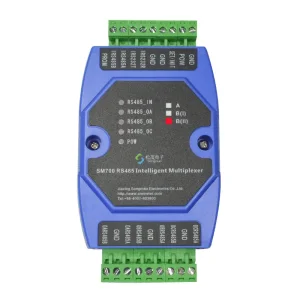
The future of Modbus modules lies in Protocol Convergence and Intelligence at the Edge. We are moving beyond simple RS485 to RS232 conversion into more sophisticated domains:
Integration of 5G/LTE-M into SM626H series for true wireless industrial telemetry.
AI-driven diagnostic modules that predict sensor failure via Modbus register analysis.
Transitioning to MQTT and OPC UA natively within Modbus gateways for seamless Cloud-Native Industrial IoT.

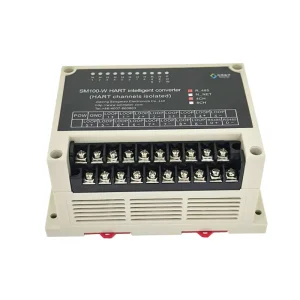
Using the SM100-W series to collect HART data from remote wellheads and transmitting via Modbus TCP to centralized control rooms.

Implementing SM626H-A collectors for GPRS-based flow meter monitoring in urban water distribution networks.

Converting 4-20mA air quality sensors to Modbus RTU for integration into smart city environmental platforms.
Our modules feature industrial-grade components, wide-voltage input ranges (typically 9-36V DC), and built-in isolation to protect against electrical surges and noise commonly found in factories.
Yes, products like the SM100-W series support multi-point HART communication, allowing you to connect up to 8 or 16 HART instruments to a single Modbus node, significantly reducing cabling costs.
Absolutely. We provide comprehensive documentation, SDKs, and direct engineering support to help your team map Modbus registers and configure communication parameters for your specific PLC or SCADA environment.
Our manufacturing process follows ISO 9001 standards, and our protocol converters are designed to meet CE and RoHS requirements, ensuring global interoperability and safety compliance.