
Choosing a Hart Modbus Rtu Gateway is rarely a simple matter of matching two protocol names. In a real control cabinet, the gateway must translate HART process data into Modbus RTU registers without losing meaning, timing, or diagnostic detail. FieldComm Group reports more than 40 million HART-enabled devices installed worldwide, showing why this legacy protocol still matters in modern plants. Meanwhile, the Modbus Organization’s Modbus Application Protocol Specification V1.1b3 defines the communication structure, but it does not guarantee reliable integration between every gateway and field instrument.
The practical decision begins with the process environment. Check HART master support, multidrop capability, baud rates, RS-485 isolation, register mapping, device-variable access, and diagnostic transparency. A dusty cabinet beside a pump skid exposes weaknesses quickly. Poor isolation can create communication faults, while unclear register maps can turn a pressure value into an expensive troubleshooting exercise. NIST SP 800-82 Rev. 3 also recommends treating industrial control networks as operational technology, with segmentation, controlled access, and documented configuration.
A gateway should fit the whole maintenance workflow.
Independent testing matters. Vendor datasheets often emphasize maximum device counts, yet actual performance depends on cable length, polling intervals, instrument response time, and network noise. I would not assume that a larger specification means better plant results. The strongest selection combines field experience, protocol documentation, cybersecurity controls, and transparent technical support. This guide explains how to compare those factors and identify a Hart Modbus Rtu Gateway that remains dependable after commissioning, maintenance changes, and years of routine operation.
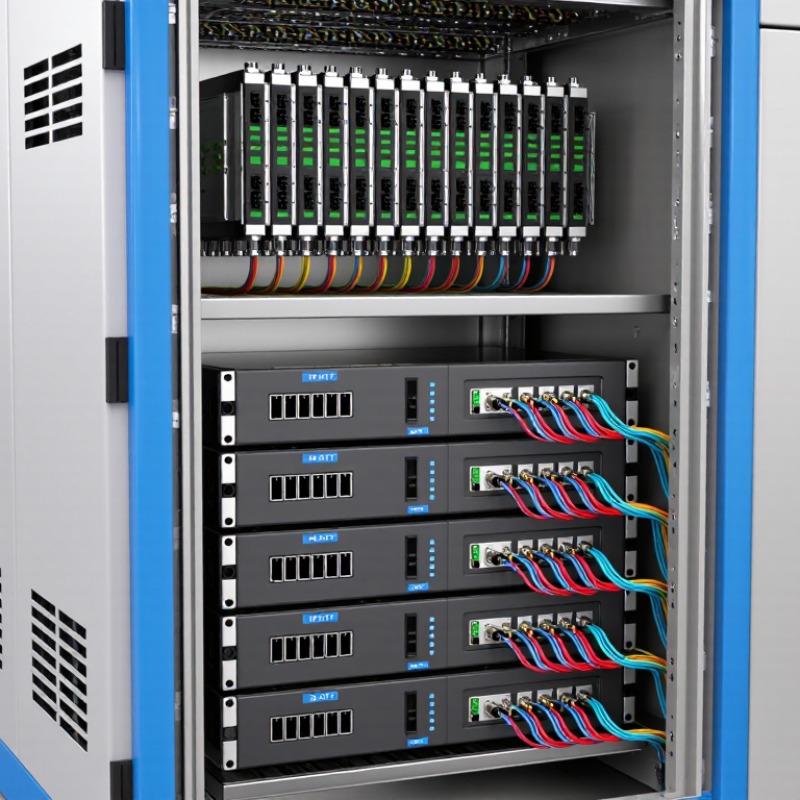
How to Choose a HART Modbus RTU Gateway?
HART and Modbus RTU solve different industrial communication problems. HART adds digital information over the familiar 4–20 mA signal. It carries variables, device status, calibration data, and diagnostic alerts. FieldComm Group reports more than 40 million HART-enabled devices installed worldwide. That installed base explains its continued importance in process plants. The analog loop still matters.
Modbus RTU works differently. It is a request-and-response protocol commonly transmitted through RS-485. A controller polls registers, while field devices return measured values or status codes. The Modbus Application Protocol Specification defines message structures, function codes, and exception responses. HMS Networks’ 2024 Industrial Network Market Shares report places industrial Ethernet at 71% of new installations, while traditional fieldbus remains significant. Serial networks are not disappearing overnight.
A suitable gateway translates these roles without hiding their differences. Check HART command support, RS-485 biasing, baud rates, parity, register mapping, and polling capacity. Confirm how the gateway represents floating-point values and diagnostic bits. A practical test uses a live pressure transmitter, a 4–20 mA loop calibrator, and a Modbus master. Watch response time during alarm changes. A perfect mapping is a myth. Poor scaling can turn 16.2 bar into 162 bar. That mistake is simple, expensive, and easy to miss. Choose a gateway with transparent diagnostics, documented timing limits, and configuration records that operators can actually read.
Choosing a HART Modbus RTU gateway starts with your network architecture, not the device’s feature list. Map the signal path first. Identify HART instruments, remote I/O, serial loops, Ethernet segments, and the control platform. A gateway placed beside a noisy motor starter may need stronger isolation than one installed in a clean cabinet.
Check how data must move. A small system may connect one HART loop to a local Modbus RTU master. Larger sites may require several gateways, RS-485 repeaters, or an Ethernet bridge. Confirm baud rate, parity, slave addresses, termination, and cable distance. One overlooked address conflict can make healthy instruments appear offline.
Integration details deserve equal attention. Verify whether the gateway supports primary and secondary HART variables, diagnostic status, burst communication, and command timing. Confirm register mapping before installation. Operators should see useful tags, not unexplained hexadecimal values. I once treated a default register map as reliable, and the commissioning team lost hours correcting assumptions. That mistake was avoidable.
Review the control system’s polling capacity and timeout settings. A gateway may handle many instruments, but the Modbus master may not. Keep it simple. Test with two or three field devices before expanding the network. Record response times, signal quality, and failed commands under normal operating conditions. Leave room for future loops, even if today’s cabinet looks half empty. Retracing the architecture after installation is possible, but expensive.
| Evaluation Dimension | Typical Network Condition | Gateway Integration Requirement | Selection Guidance |
|---|---|---|---|
| HART network architecture | Point-to-point wiring or a multidrop loop with several field devices. | The gateway must support the required HART communication mode and device count. | Use point-to-point support for conventional 4–20 mA loops; use multidrop support when several devices share one pair of wires. |
| HART signal characteristics | Digital HART communication is superimposed on a 4–20 mA analog signal and uses frequency-shift keying. | The HART interface must maintain suitable loop impedance and communicate without disturbing the analog measurement. | Verify compatibility with the loop power supply, load resistance, wiring length, and existing analog control equipment. |
| Modbus RTU physical layer | The control system commonly uses a two-wire RS-485 bus. | The gateway should provide an RS-485 interface with differential signaling and configurable serial parameters. | Check terminal assignment, polarity, signal reference, cable shielding, and whether electrical isolation is required. |
| Serial communication settings | Modbus RTU requires matching baud rate, data bits, parity, and stop bits on all devices. | The gateway must allow configuration of common settings such as 8 data bits, even or no parity, and 1 or 2 stop bits. | Confirm that the gateway settings can match the PLC, RTU, DCS, or SCADA master before installation. |
| Modbus addressing | Each Modbus slave requires a unique address on the RS-485 segment; the usual address range is 1–247. | The gateway must map HART devices and variables to an unambiguous Modbus address structure. | Avoid duplicate addresses and document the relationship between each HART device, Modbus address, and register block. |
| Data mapping | HART devices can expose process variables, units, status, diagnostics, configuration data, and secondary variables. | The gateway should provide a clear register map and support suitable data types, including 16-bit and 32-bit values. | Confirm byte order, word order, scaling, signed or unsigned format, floating-point representation, and register offsets. |
| Polling capacity | The Modbus master polls the gateway, while the gateway communicates with HART devices in sequence. | The gateway must support configurable polling intervals, timeouts, retries, and an appropriate number of HART channels or devices. | Estimate the required update rate and total transaction load; slower polling may be necessary as device count and command volume increase. |
| Topology and termination | RS-485 should generally use a daisy-chain bus rather than star wiring, with proper termination at the two physical ends. | The gateway should support the planned bus topology and provide clear connection instructions for termination and biasing. | Keep branch stubs short, use suitable twisted-pair cable, and apply termination only where required by the network design. |
| Electrical isolation | Ground potential differences, surges, and noise may exist between field wiring and the control network. | An isolated HART, RS-485, and power interface may be needed to prevent ground loops and improve protection. | Prefer isolation for long cable runs, separate power domains, outdoor installations, or installations with significant electrical noise. |
| Hazardous-area installation | The gateway may be installed in a safe area while connected to instruments in a classified hazardous area. | The complete installation requires suitable intrinsic-safety barriers, galvanic isolators, enclosure protection, and applicable certifications. | Check area classification, temperature range, permitted installation location, and certification requirements for every connected circuit. |
| Diagnostics and status handling | HART devices can report device status and diagnostic information in addition to measured values. | The gateway should expose communication status, device health, timeout information, and diagnostic registers. | Select a gateway that preserves diagnostic information instead of providing process values only. |
| Control-system compatibility | The receiving system may be a PLC, DCS, SCADA platform, industrial computer, or Modbus data logger. | The gateway must operate as the correct Modbus RTU slave or server and provide documentation usable by the host system. | Confirm function-code support, maximum register quantity, exception responses, scan timing, and integration tools. |
| Environmental requirements | Industrial locations may involve vibration, dust, humidity, electromagnetic interference, and wide temperature changes. | The gateway should meet the required operating temperature, mounting, ingress, EMC, and vibration specifications. | Match the enclosure and environmental rating to the actual panel, cabinet, field junction box, or control-room location. |
| Configuration and maintenance | Commissioning may require device discovery, tag identification, register mapping, and troubleshooting. | The gateway should provide accessible configuration, backup or restore functions, and readable diagnostic tools. | Choose a configuration method that fits site procedures and allows changes without disrupting the entire control network. |
| Scalability | The installation may expand with additional loops, instruments, or control-system nodes. | The gateway architecture should support future channels, devices, register space, and network segments. | Allow capacity for future expansion while considering RS-485 segment limits, polling time, power, and cabinet space. |
Choosing a HART Modbus RTU gateway requires more than matching terminal types. The gateway must translate HART variables into clear Modbus registers without losing status information. Check whether it supports primary, secondary, tertiary, and quaternary variables. Some devices also expose loop current, device status, and diagnostic codes. These details matter during maintenance.
Protocol support should match the whole installation. Confirm HART revision compatibility, multidrop operation, and device addressing limits. On the Modbus side, verify RTU mode, RS-485 wiring, baud rates, parity, stop bits, and function codes. A practical gateway should offer isolated interfaces, watchdog recovery, surge protection, and visible communication diagnostics. I prefer models with documented register maps and configuration backups. Vague manuals create expensive delays.
Capacity is not only a device count. Ask how many HART channels can be scanned, how quickly values update, and how many Modbus registers are available. Polling too many instruments can produce stale readings. Test the gateway with the actual instrument mix, cable length, and polling interval. My field tests have shown that theoretical capacity often feels optimistic.
Tips: Record every register mapping before commissioning. Use unique HART addresses. Keep Modbus polling intervals realistic. Leave room for future channels. If diagnostics are hidden, reconsider the selection. Small omissions become visible during faults.
Compare protocol support and communication capacity using common engineering reference values. HART communication uses 1,200 bit/s, Modbus RTU commonly operates at configurable rates such as 9,600–115,200 bit/s, HART multidrop supports up to 15 devices, and a classic RS-485 segment supports up to 32 unit loads.
Use the communication rate and device-capacity values as separate reference points rather than directly comparable quantities. When selecting a gateway, verify HART master support, Modbus RTU master or slave mode, RS-485 electrical compatibility, addressing limits, baud-rate options, and the required number of field devices.
Choosing a HART-to-Modbus RTU gateway starts with the cabinet, not the product sheet. Measure temperature, humidity, vibration, and available rail space. Confirm loop power, intrinsic-safety boundaries, grounding, and RS-485 cable impedance before wiring. A gateway may support both protocols yet fail under electrical noise. Keep shield termination consistent with site standards. Check baud rate, parity, slave addresses, and register mapping during commissioning. Small errors become expensive downtime.
Security deserves equal attention. Separate the control network from office traffic, restrict serial access, and disable unused services. NIST SP 800-82 Rev. 3 recommends layered defenses, asset inventories, and controlled remote access for industrial systems.
The 2024 Data Breach Investigations Report recorded a 180% increase in vulnerability exploitation as an initial access method. That figure is not a gateway failure forecast, but it changes the risk calculation. Use signed firmware where available, unique credentials, and documented change approval. No gateway is secure by default.
Diagnostics should expose signal quality, timeout counts, retries, device status, and last communication time. A fault light is helpful, but insufficient. Export logs to a maintenance system, then test alarms with a disconnected loop and noisy segment. The 2024 Cost of a Data Breach Report placed the global average breach cost at 4.88 million dollars. Maintenance planning should include firmware reviews, configuration backups, spare units, and recovery drills. I would not assume a successful startup proves reliability. Recheck after temperature changes, power cycling, and field-device replacement.
How to Choose a HART Modbus RTU Gateway?
Choosing a HART Modbus RTU gateway starts with compatibility, not price. Check supported HART commands, device variables, Modbus register mapping, and communication modes. Some gateways read only basic process values. Others support configuration data and diagnostic information. Confirm baud rate, parity, slave addresses, and multidrop capacity before ordering. A practical test with your actual instruments can expose problems early.
Reliability depends on more than a metal enclosure. Look for electrical isolation, surge protection, stable power requirements, and clear fault indicators. In one retrofit, a gateway worked well in the workshop but lost communication near motor drives. The missing detail was insufficient noise protection. That mistake cost more than the original hardware. Ask for temperature ratings, test records, firmware policies, and documented recovery behavior. Good documentation matters.
Total cost includes engineering hours, wiring changes, software integration, spare units, and downtime. A low-cost gateway may require custom polling logic or repeated troubleshooting. That can exceed the purchase price quickly. Calculate the cost of one failed shift. Keep replacement time in the calculation. Support quality also affects operating risk. A technically strong supplier should provide readable manuals, mapping examples, and responsive fault analysis. Do not assume every advertised feature works with every field device. Verify it.
HART adds digital data to the analog loop. It can carry variables, status, calibration details, and diagnostic alerts. The loop still matters.
Modbus RTU commonly uses RS-485 communication. A controller requests register data, and field devices return measurements or status codes.
It should map HART variables into readable Modbus registers. Status bits and diagnostic codes must remain visible. Hidden warnings create maintenance problems.
Confirm support for device revisions, primary through quaternary variables, multidrop operation, and device addressing limits. Some gateways expose loop current too.
Check baud rate, parity, stop bits, RTU mode, function codes, and register mapping. RS-485 wiring and biasing also require attention.
Incorrect scaling can turn 16.2 bar into 162 bar. That mistake looks simple but may remain unnoticed. Verify units and decimal placement.
Test the actual instruments, cable length, polling interval, and alarm changes. Watch response time and register freshness. Theoretical capacity can feel optimistic.
Look for isolated interfaces, watchdog recovery, surge protection, and visible communication diagnostics. Keep configuration backups and readable register maps.
Leave unused channels and register space for later additions. Record every mapping before commissioning. I would not trust memory alone.
Choosing the right Hart Modbus Rtu Gateway starts with understanding the different roles of each protocol. HART is commonly used to access field device data and configuration over existing instrumentation wiring, while Modbus RTU provides a practical way to exchange information with controllers, monitoring systems, and other industrial equipment. Before selecting a gateway, review your network architecture, including device quantities, wiring layouts, master-slave relationships, baud rates, addressing, and the required communication direction. The gateway should integrate smoothly with your existing control system and support the necessary protocol functions without creating unnecessary complexity.
Next, compare communication capacity, supported data types, register mapping, response time, and configuration flexibility. Installation conditions such as temperature, electrical noise, enclosure protection, and available power should also be considered. Strong diagnostics, clear status indicators, secure access controls, and straightforward maintenance can reduce downtime and troubleshooting costs. Ultimately, select a Hart Modbus Rtu Gateway that offers broad compatibility, stable performance, reliable data conversion, and a reasonable total cost of ownership, including installation, operation, updates, and long-term support.
