
7 Best USB to HART Cables for Global Buyers

Time:2026-09-12 Author:Sienna
0%

Choosing the right Usb To Hart Cable can determine whether a field commissioning task takes minutes or consumes an entire afternoon. Global buyers often compare connector types, HART modem compatibility, USB drivers, isolation, cable length, and software support. These details matter when connecting a laptop to a pressure transmitter beside a noisy pump or inside a crowded control cabinet.

This guide introduces seven practical USB-to-HART cable options for engineers, maintenance teams, system integrators, and purchasing specialists. Each product should be assessed against real operating conditions, not only its advertised data sheet. Check whether the cable supports the required HART communication mode, works with your operating system, and includes clear installation instructions. A reliable option should also provide stable signal performance, durable strain relief, and suitable protection for routine industrial handling.

Compatibility comes first.

Experience shows that a cable working perfectly with one configuration may behave differently with another. Grounding, firmware, USB ports, and host software can affect communication. Some products appear inexpensive but create hidden costs through driver problems or repeated troubleshooting. This is where careful testing becomes valuable. The recommendations in this overview consider practical usability, documentation quality, connection stability, and supplier reliability. They are not a substitute for site verification, and that limitation deserves attention. Before ordering, confirm the instrument model, communication interface, required accessories, and regional support arrangements. A thoughtful comparison can reduce installation delays and help global buyers choose equipment with greater confidence.
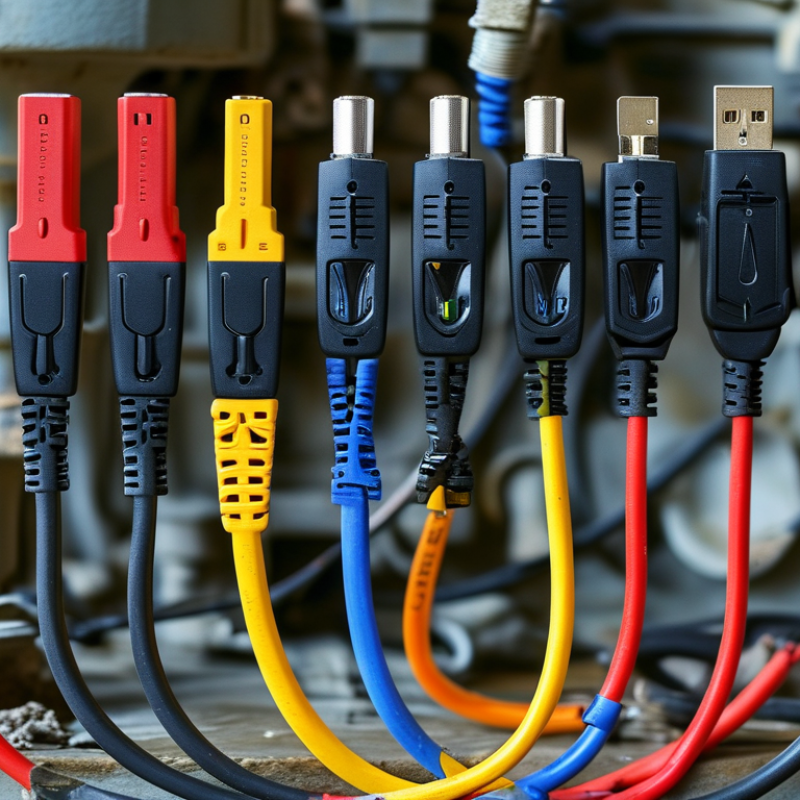
7 Best USB to HART Cables for Global Buyers

HART Fundamentals: 4–20 mA Signaling, 1,200-bps FSK, and HART 7

A USB-to-HART cable is useful only when its electrical behavior matches the loop. HART keeps the process value on a 4–20 mA current signal. It adds digital communication without replacing that measurement channel. The digital layer uses Bell 202-style frequency-shift keying, at 1,200 bits per second. A 1,200-hertz mark represents one binary state. A 2,200-hertz space represents the other. That speed seems slow today. It is deliberate.

FieldComm Group technical publications describe HART as a widely deployed protocol, with more than 40 million field devices reported across industry. ARC Advisory Group market analyses have also identified HART as a major installed-base technology for process instrumentation. HART 7 extends device communication through enhanced status information, standardized commands, and broader diagnostic support. These details matter when comparing USB-to-HART cables, because compatibility involves more than a USB connector.

Check loop resistance, grounding, isolation, and modem loading before blaming configuration software. A compliant HART loop commonly requires at least 230 ohms of resistance for reliable signaling. Verify driver support and galvanic isolation during laptop-based maintenance. Field technicians often find clean 4–20 mA readings alongside failed digital polling. The cause may be a missing resistor, excessive capacitance, or a noisy power supply. No cable fixes poor loop design. That limitation deserves attention.

USB-to-HART Evaluation Criteria: Isolation, Drivers, EMC, and Loop Load

7 Best USB to HART Cables for Global Buyers

USB-to-HART Evaluation Criteria: Isolation, Drivers, EMC, and Loop Load

Choosing a USB-to-HART cable requires more than checking connector types. Galvanic isolation protects the computer from loop transients and grounding differences. This matters in cabinets with long signal runs. I prefer isolation tested under realistic field conditions, not only stated in a datasheet. A small isolation gap can become a costly weakness.

Driver support is equally practical. Confirm compatibility with current Windows versions, signed drivers, and common configuration software. A cable that works on one laptop may fail after an operating system update. Test installation before visiting the site. Keep an offline driver copy. That saved me once. I initially assumed automatic installation would work, but the maintenance laptop had restricted permissions.

EMC performance deserves a careful inspection. Look for controlled shielding, stable communication near variable-frequency drives, and clear immunity test information. Also measure loop load. The modem adds resistance and may reduce available voltage, especially in low-power loops. Check the transmitter, power supply, barrier, and existing resistor together. A 250-ohm load is common, but it should not be treated as universal. Test communication at the lowest expected supply voltage. Short cables are easier to manage, yet longer leads can expose noise problems. Small details matter.

Seven USB-to-HART Cables Compared by Protocol, OS, and Safety Ratings

Choosing among the seven best USB-to-HART cables requires more than checking connector shape. Protocol support is the first practical filter. Some cables handle HART revision 5 and revision 7, while others provide limited compatibility with older field devices. Check whether the cable supports point-to-point communication, device polling, and transparent modem operation. A stable 1200-baud connection matters during configuration and diagnosis. Small details matter.

Operating-system support can change the buying decision. Most cables target current Windows systems through USB virtual COM drivers. A few may also work with Linux, but support is often less polished. Confirm 32-bit and 64-bit driver availability before purchase. Check compatibility with asset-management software, loop calibrators, and virtual machines. Testing with a spare transmitter is wise. I would not trust a generic driver page without a date.

Safety ratings separate laboratory tools from field-ready equipment. Compare galvanic isolation, overvoltage protection, and stated barriers for hazardous locations. IECEx or ATEX markings must match the intended zone and installation method. A cable without intrinsic-safety certification should remain outside classified areas, even if its enclosure looks robust. Inspect the certificate, not just the product description. The seven options may appear similar, yet their isolation ratings, cable lengths, and grounding instructions can differ sharply. One overlooked limitation is enough to delay commissioning.

Global Compliance Checks: IEC 61158, ATEX, IECEx, and USB Standards

7 Best USB to HART Cables for Global Buyers

Global buyers should treat compliance as a design check, not a packaging claim. IEC 61158 compatibility helps confirm protocol behavior, but it does not prove electrical safety. A suitable USB-to-HART cable should support stable communication, protective isolation, and documented current limits. USB 2.0 provides a 480 Mbps signaling ceiling, although HART diagnostics require far less bandwidth. Reliability matters more than speed.

Hazardous-area use requires stricter evidence. ATEX applies to equipment placed on the European market, while IECEx supports international certification practices. A cable used near classified zones may need certified apparatus, approved installation conditions, and controlled energy levels. The cable alone is rarely enough. Check the certificate number, gas group, temperature class, ambient range, and separation requirements. I would not trust a compliance logo alone.

The International Federation of Robotics reported 541,302 industrial robot installations worldwide in 2023, a 10% annual increase. More automated plants also mean more field devices requiring dependable commissioning tools. Industry estimates place installed HART-enabled devices above 40 million, showing why interoperability remains commercially important. During testing, technicians should record USB enumeration, loop resistance, isolation behavior, and communication stability at the cabinet edge. Small omissions become expensive.

Standards can still be interpreted differently. That deserves review. Ask for test reports, revision references, and traceable calibration records before purchasing. A lower-cost cable may work on a clean bench, yet fail beside a variable-frequency drive. Field experience is less tidy than datasheets.

7 Best USB to HART Cables for Global Buyers - Global Compliance Checks: IEC 61158, ATEX, IECEx, and USB Standards

The following comparison uses representative cable categories and buyer-oriented specifications. ATEX and IECEx suitability applies only when the complete interface assembly has valid, traceable certification for the intended hazardous-area zone and protection concept.

Rank Cable Category Typical USB Interface HART Function Isolation and Loop Requirements Typical Cable Length IEC 61158 Check ATEX / IECEx Check USB Compliance Check Best Use
1 Galvanically Isolated USB-to-HART Modem Cable USB 2.0 Type-A or USB-C via certified adapter Bell 202 FSK at 1,200 bit/s; point-to-point and multidrop communication Electrical isolation typically 1.0–2.5 kVrms; normally requires an externally powered HART loop 1.5–2.0 m Confirm HART physical-layer compatibility and manufacturer test evidence referencing IEC 61158-2 where applicable Use in hazardous areas only with a complete certified intrinsically safe system; ordinary USB isolation is not ATEX or IECEx certification Check USB 2.0 electrical compatibility, driver support, connector shielding, and maximum current draw General commissioning, calibration, diagnostics, and maintenance
2 Intrinsically Safe USB-to-HART Interface Cable USB 2.0 Type-A; USB-C versions require an approved adapter HART master interface for intrinsically safe field connections Energy-limited connection; entity parameters such as Ui, Ii, Pi, Ci, and Li must match the loop documentation 1.5–3.0 m Verify the HART modulation, impedance, and signal-level requirements against the applicable physical-layer specification Require a valid ATEX certificate and/or IECEx certificate, equipment group, category, EPL, gas/dust marking, and installation conditions Verify USB host compatibility separately; hazardous-area approval does not automatically certify the USB host computer Petrochemical, pharmaceutical, chemical, and other classified-area service
3 USB-C Rugged HART Service Cable USB-C, USB 2.0 data mode Two-way HART communication through a USB virtual COM port Prefer isolated circuitry; loop power is normally supplied by the transmitter loop or a dedicated communicator supply 1.0–2.0 m; reinforced strain relief recommended Check protocol timing, HART impedance loading, and compatibility with the selected field communicator software Treat as non-hazardous unless the complete assembly carries appropriate ATEX or IECEx documentation USB-C connector shape alone does not prove USB 3.x performance; confirm USB 2.0 data and power specifications Modern laptops, tablets, mobile maintenance kits, and field service work
4 Passive HART USB Modem Cable USB Type-A, usually USB 2.0 full-speed Modulates and demodulates HART FSK signals on a powered two-wire loop Limited or no galvanic isolation; requires correct loop resistance, commonly around 230–600 ohms depending on the installation 1.5–2.0 m Confirm compliance with HART signal-frequency, amplitude, termination, and loading requirements Not suitable for hazardous locations unless specifically certified as part of an approved system Confirm USB 2.0 full-speed operation, operating-system drivers, and USB bus-powered current limits Cost-sensitive bench testing and non-hazardous-area troubleshooting
5 Rugged Extended-Reach HART Cable Set USB 2.0 Type-A with detachable field lead HART communication through a detachable clip, terminal, or probe connection Isolated versions are preferred; total loop capacitance and added resistance must remain within the installation limits 3–5 m total set length Validate signal integrity at the full lead length and confirm that added capacitance does not attenuate the HART signal Cable length and rugged construction do not establish hazardous-area approval; request certificates for the complete assembly Check USB cable shielding, ferrite or EMC provisions, connector retention, and driver stability Large cabinets, test benches, and equipment with difficult terminal access
6 USB-to-HART Cable with Integrated Loop Power USB 2.0 Type-A or USB-C HART communication plus a controlled test supply for two-wire instruments Typical test output may be adjustable around 9–24 V DC; verify current limit, polarity, isolation, and loop-load capability 1.5–2.0 m Confirm the HART modem remains within signal and impedance requirements while the integrated supply is operating Integrated power does not imply intrinsic safety; use in classified areas only with documented energy limitation and certification Check USB power consumption, over-current protection, USB enumeration, and isolation between USB and loop terminals Workshop testing of unpowered transmitters and spare instruments
7 Panel-Mount or DIN-Rail USB-to-HART Interface Cable USB Type-B, Type-A, or USB-C connection to a panel interface Permanent HART access for control panels, test racks, or remote maintenance points Usually externally powered; select isolated versions for control-system ground-potential differences 1–3 m USB lead plus fixed terminal wiring Verify HART compatibility with the host system, loop impedance, grounding arrangement, and EMC installation practices Confirm enclosure, gland, temperature, and installation certification; panel mounting alone is not ATEX or IECEx approval Check USB cable routing, shielding, maximum recommended length, and host-driver support Permanent test points, automation panels, laboratories, and system-integration cabinets
Global buyer verification checklist: Request the current declaration of conformity, ATEX certificate or IECEx certificate where applicable, hazardous-area marking, entity parameters, USB electrical specification, operating-system driver information, environmental ratings, and evidence of HART interoperability before purchase.

Field Setup and Troubleshooting: 250-Ω Loads, Polarity, and Communication Range

7 Best USB to HART Cables for Global Buyers

Field setup starts with the loop, not the USB plug. FieldComm Group’s HART Physical Layer Specification defines signaling at 1,200 bit/s, using 1,200 Hz and 2,200 Hz tones. Add a 250-Ω load when the host loop lacks sufficient impedance. Measure it. Without that load, the modem may detect voltage but fail to exchange data. Excessive resistance can reduce current-loop headroom near 20 mA. IEC 61158-5-20 also identifies the physical-layer requirements for reliable HART communication.

Polarity deserves a physical check at the terminals. Some interfaces tolerate reversed connections, but troubleshooting becomes less predictable. Connect the cable’s positive and negative leads carefully, then verify loop voltage and resistance before opening software. FieldComm Group guidance commonly cites communication distances up to 1,500 meters with suitable twisted-pair cable. That figure assumes controlled capacitance, stable power, and correct resistance. Branch stubs, poor shielding, and electrical noise can shorten the range sharply. Keep the USB-to-HART cable close to the loop when possible.

For global purchasing, choose cables with clear wiring labels, isolation where required, and documented operating limits. Bench tests can look perfect. Field cabinets are less polite. I record loop current, DC voltage, resistance, cable length, and grounding conditions before replacing hardware. That habit saves time, although I still sometimes blame the cable too quickly. A short test lead, a verified 250-Ω resistor, and a spare isolated interface reveal more than repeated software resets.

FAQS

What does a USB-to-HART cable actually do?

It adds digital communication to an existing 4–20 mA measurement loop. The current signal still carries the process value. It does not replace it.

What signaling method does HART use?

HART uses frequency-shift keying at 1,200 bits per second. A 1,200-hertz tone represents one binary state. A 2,200-hertz tone represents the other.

Why might digital communication fail while the current reading looks normal?

The loop may lack enough resistance, often requiring about 230 ohms. Missing loads, excessive capacitance, grounding problems, or electrical noise can block digital polling. The current reading can still appear correct.

When should a 250-ohm resistor be added?

Add a 250-ohm load when the loop lacks sufficient impedance. Measure the loop before adding it. Too much resistance can reduce voltage headroom near 20 mA.

How should the cable be connected?

Check the positive and negative terminals physically. Verify loop voltage and resistance before opening configuration software. Some interfaces tolerate reversed polarity, but troubleshooting becomes less predictable.

What affects communication distance?

Suitable twisted-pair cable can support distances up to about 1,500 meters. Stable power, controlled capacitance, and proper resistance are necessary. Branch stubs and poor shielding may shorten the range sharply.

Does isolation matter when using a laptop?

Yes, galvanic isolation may be necessary during laptop-based maintenance. Check driver support and operating limits before connection. A USB connector alone proves very little.

What should be recorded during troubleshooting?

Record loop current, DC voltage, resistance, cable length, and grounding conditions. A short test lead and a verified 250-ohm resistor help. I sometimes blame the cable too quickly.

Conclusion

This guide compares seven Usb To Hart Cable options for global buyers, focusing on the technical features that matter in real industrial applications. It explains how HART communication combines 4–20 mA analog signaling with 1,200-bps FSK digital data, including key considerations for HART 7 compatibility. Each cable is evaluated by protocol support, operating-system drivers, electrical isolation, EMC performance, loop loading, and overall ease of deployment.

The article also highlights important compliance checks, including IEC 61158, ATEX, IECEx, and applicable USB requirements. Practical setup advice covers the use of 250-ohm loads, correct polarity, communication distance, and common troubleshooting steps. By reviewing safety ratings, compatibility, and field performance together, readers can select a suitable USB-to-HART solution for commissioning, diagnostics, maintenance, and process-instrument configuration across different regions and operating environments.

Sienna

Sienna

Sienna is a skilled marketing professional with a deep expertise in our company’s core products and services. With a passion for innovation and detail, she plays a pivotal role in crafting insightful blog posts that not only highlight the unique features of our offerings but also provide valuable......